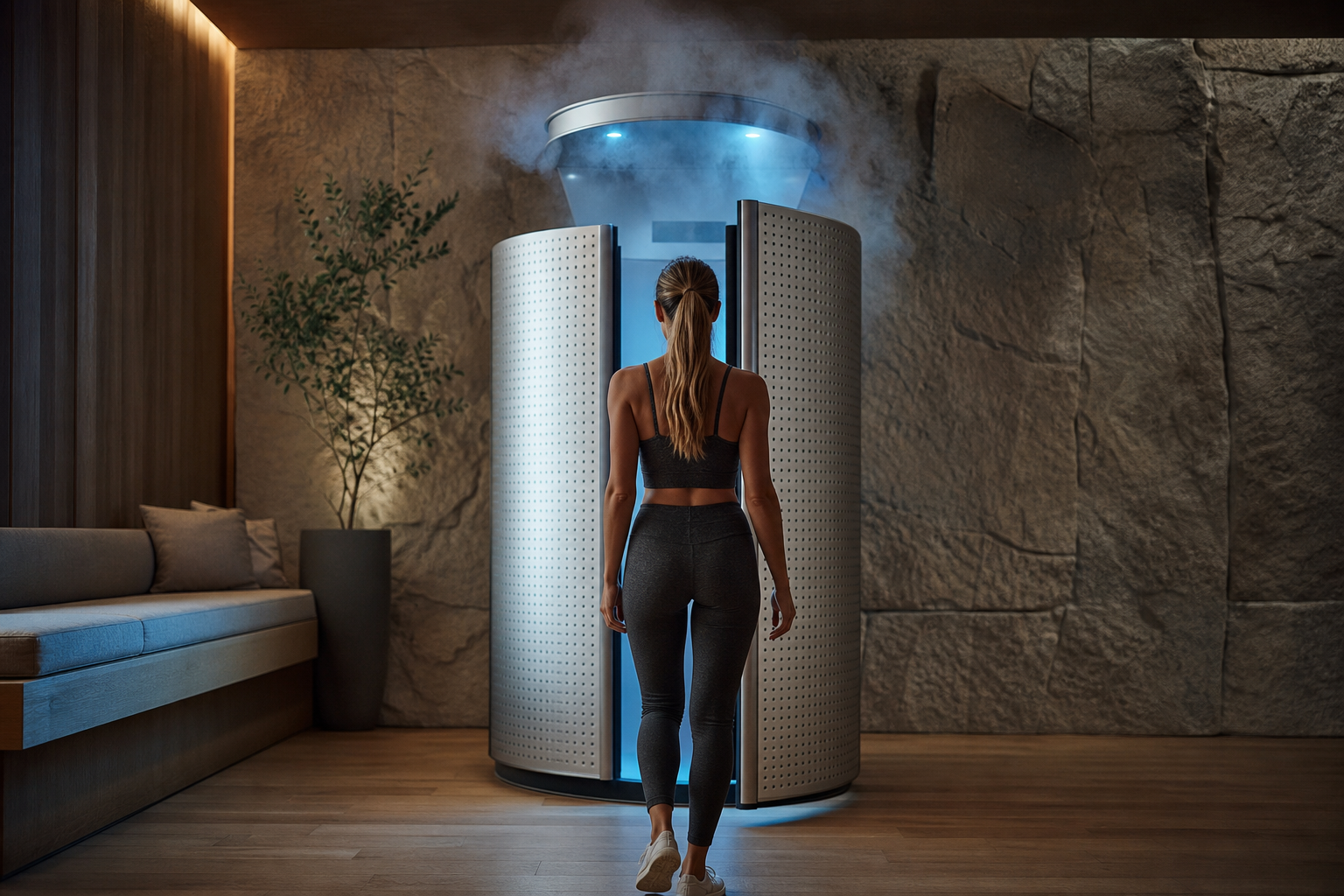
Cryotherapy is one of the most effective recovery tools available today. It involves exposing the body to extremely low temperatures in a controlled way for a short period of time, in order to activate natural tissue-repair mechanisms, reduce inflammation and speed up physical and mental recovery.
At Seven Seeds we use whole-body systemic cryotherapy: a protocol of two to three minutes in a chamber at temperatures that can range from -110°C to -140°C. Extreme cold triggers deep physiological responses that conventional methods such as ice or cold baths cannot achieve.
What happens in your body during a cryotherapy session?
When the body detects intense cold, it sets off a series of adaptive responses: peripheral blood vessels constrict to protect vital organs, the nervous system releases endorphins and norepinephrine, and metabolism speeds up to generate heat. When you step out of the chamber, blood rushes back to the tissues, loaded with oxygen and nutrients.
This cycle of vasoconstriction and vasodilation has measurable effects on chronic inflammation, muscle soreness, sleep quality and energy levels.
Documented benefits of cryotherapy
Recent scientific literature supports the use of cryotherapy to reduce delayed-onset muscle soreness (DOMS), improve recovery in high-performance athletes, reduce systemic inflammatory markers, improve mood and day-to-day energy, and support longevity and holistic wellbeing protocols.
How often is it recommended?
Depending on your goals, the recommended frequency ranges from one to five sessions a week. For active recovery after intense exercise, three sessions a week deliver optimal results. For general wellbeing and longevity benefits, one or two sessions are enough for most people.
At Seven Seeds, cryotherapy is part of individually designed recovery protocols, combined with other tools such as photobiomodulation, the hyperbaric chamber or thermal contrast.
If you’re curious to experience cryotherapy in a thoughtfully designed setting, we invite you to request a visit. The first experience is best understood in person.